
10 Common Mistakes Non-Residents Make When Opening a Corporation in Canada
Non-resident incorporation mistakes can cause serious issues when registering a company in Canada, especially regarding compliance and banking reality. Avoiding common errors related to company structure, Canadian tax registration, and unnecessary tax obligations is key to a smooth start with Open Corporation For $35.
Quick Summary
Most of these mistakes trace back to one assumption: that incorporation is a single transaction rather than the start of an ongoing obligation. The registered office, the CRA accounts and the annual filings all follow, and skipping any of them is what turns a cheap setup into an expensive cleanup. Please note the director residency rule differs by jurisdiction, so settle that before you file.
| Aspect | Details |
|---|---|
| The biggest error | Treating incorporation as a one-off transaction. |
| The address trap | A PO box or unapproved virtual address gets filings rejected. |
| The tax trap | Registering the company does not register you for GST/HST. |
| The slow step | Banking, which most founders leave far too late. |
Reading time: 26 minutes.
Table of Contents
- Complete Guide to Opening a Corporation in Canada for Non-Residents
- Why Canada Is Attractive for Foreign Entrepreneurs
- Federal vs Provincial Incorporation for Non-Residents
- Resident Director Requirement Explained
- Step-by-Step: How to Open a Corporation in Canada
- How Much Does It Cost to Open a Corporation in Canada?
- Common Mistakes Non-Residents Make
- Common Mistakes Summary Table
- Realistic Example Scenario: US-Based SaaS Founder
- Frequently Asked Questions
- Why Choose Open Corporation For $35?
- Professional Guidance and Quick Reference
The Numbers That Matter
This article covers Canada, with Ontario and Toronto context, and assumes a foreign entrepreneur incorporating here without living in Canada. All figures are estimates in Canadian dollars. Fees, thresholds, processing times and director residency rules are set by the federal and provincial governments, and they change. This is educational information only and not tax, legal, or financial advice. Please confirm your own position with a CPA before acting.
Complete Guide to Opening a Corporation in Canada for Non-Residents
Complete Guide to Opening a Corporation in Canada for Non-Residents
The Basics
Don’t treat incorporation like just another transaction. Many get it wrong by ignoring the registered office rules or skipping tax registration. These mistakes can cost you later.
Open Corporation For $35 gives you an easy, affordable way to incorporate starting at $35 plus government fees. This service helps non-residents handle compliance and get their business ready to run smoothly.
Can a Non-Resident Open a Corporation in Canada?
Yes, non-residents can open corporations here. You will need at least one Canadian resident director. It might sound tricky but foreign entrepreneurs manage it often.
| Consideration | Federal Incorporation | Provincial Incorporation |
|---|---|---|
| Residency Requirement | At least 25% of directors must be residents | Some provinces allow non-resident directors |
| Filing Complexity | Usually more complex | Often simpler with fewer rules |
| Cost Structure | Generally higher initial fees | Lower upfront costs |
| Compliance Requirements | More strict | Varies by province |
| Tax Obligations | Federal taxes apply | Provincial taxes may differ |
Risk Warning: This article states above that you will need at least one Canadian resident director, but its own tables later show Ontario and British Columbia with no residency rule at all. Please confirm the current requirement for your chosen jurisdiction before you file, since it decides whether you need a nominee.
Why Canada Is Attractive for Foreign Entrepreneurs
Why Canada Is Attractive for Foreign Entrepreneurs
Why Canada
Canada offers several good reasons why foreign entrepreneurs pick it:
- Stable legal system that protects your business.
- Worldwide respect for Canadian companies.
- Access to both Canada’s and U.S.’s big markets.
- Payment platforms like Stripe work well here.
- Friendly environment for tech and digital startups.
Avoiding non-resident incorporation mistakes helps you start on the right foot. Keep compliance in mind and watch out for common open corporation Canada errors to stay on track.
Federal vs Provincial Incorporation for Non-Residents
Federal vs Provincial Incorporation for Non-Residents
Comparison
If you’re a non-resident thinking about opening a corporation in Canada, you gotta know the difference between federal and provincial incorporation. Picking the wrong one can cause mistakes that mess with compliance, flexibility, and cost.
Here’s how they compare:
| Feature | Federal Incorporation | Provincial Incorporation |
|---|---|---|
| Jurisdiction | Canada-wide | Only in one province |
| Name Protection | Protected across all provinces | Only protected within that province |
| Filing Requirements | Centralized via Corporations Canada | Changes by province (like Ontario or BC) |
| Annual Reporting | Required federally | Each province has its own rules |
| Director Residency Rules | Some provinces stricter than federal rules | Varies a lot; some have no residency rule |
Many non-residents make mistakes by thinking one choice works everywhere. For instance, picking provincial incorporation without checking where you’ll do business might limit growth or force extra registrations.
When to pick federal incorporation?
- You want to work in many provinces.
- You want name protection all over Canada.
- You like dealing with one central agency.
When provincial makes sense?
- Your business stays mostly in one province.
- Fees or process is cheaper or simpler there.
- The province has easier director residency rules for non-residents.
Always check current rules with the right Canadian office. Knowing this helps avoid errors tied to open corporation Canada problems and compliance slips.
Resident Director Requirement Explained
Resident Director Requirement Explained
Directors
One big mistake foreign entrepreneurs make is misunderstanding resident director rules. These rules change depending on federal or provincial incorporation.
What’s this resident director rule about?
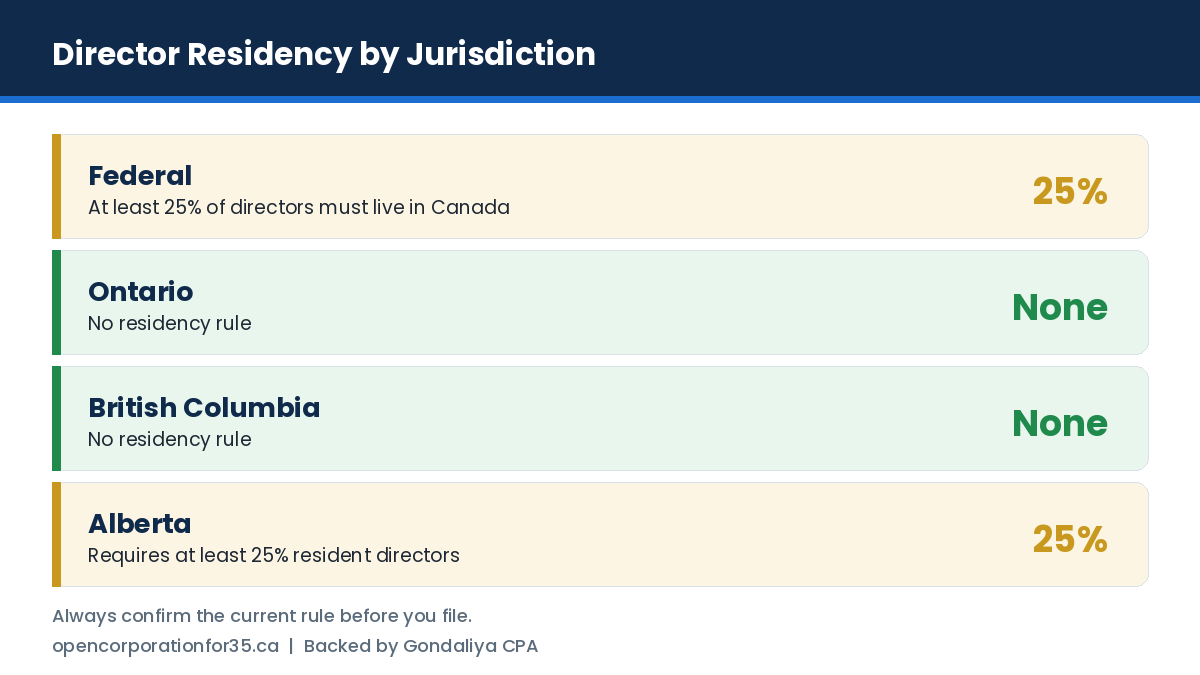
Some places say at least 25% of your directors must live in Canada. It’s often called the “25% rule.” But it doesn’t apply everywhere the same way.
Here’s a quick look:
| Jurisdiction | Resident Director Rule |
|---|---|
| Federal | At least 25% of directors must live in Canada* |
| Ontario | No residency rule** |
| British Columbia | No residency rule** |
| Alberta | Requires at least 25% resident directors |
* Check latest from Corporations Canada.
** Check current provincial laws before deciding.
Non-residents often think they can’t meet this rule if they don’t know any Canadians. But you can appoint nominee directors or use services—just be careful about risks.
Risks of nominee directors:
- You might lose control of your company decisions.
- There could be legal troubles.
- You risk failing compliance and facing penalties.
Be smart about nominee directors. Get advice made for foreign owners and be clear on who does what when you register your company.
The cheapest fix for the residency rule is usually not a nominee at all. It is choosing a jurisdiction that has no requirement, which removes both the annual fee and the loss of control the article warns about.
Step-by-Step: How to Open a Corporation in Canada for Non-Residents
Step-by-Step: How to Open a Corporation in Canada for Non-Residents
Step by Step
Opening a corporation as a non-resident isn’t simple. Many newcomers make costly mistakes related to paperwork, registrations, and banking. Follow these steps closely to avoid common pitfalls:

Step 1: Pick Your Corporate Structure
Choose what fits best: a regular business corporation (most popular), a co-op, or something else. Think about your goals and tax needs (ask a pro).
Step 2: Do a Name Search (NUANS Report)
This report checks if your name is already taken either nationwide (federal) or within a province. Skip this step, and your application may get rejected—one common error among foreigners.
Step 3: Decide on Federal vs Provincial
Based on your market plan and director rules, pick federal via Corporations Canada or go through provincial offices like ServiceOntario or BC Registry Services.
Step 4: File Incorporation Papers
Send your Articles of Incorporation plus required forms online through official websites. This makes your company legally real.
Step 5: Get Your Business Number from CRA
After incorporation approval, sign up online at CRA for your business number. This lets you set up tax accounts including GST/HST if needed.
Step 6: Open Your Bank Account
Banks usually want you there in person but some let foreigners open accounts remotely. Look into options early because delays here are super common mistakes by foreign founders.
How long does this take?
| Task | Duration |
|---|---|
| Name Search & Approval | 1–3 days |
| Incorporate & Register | 3–7 days |
| Business Number Setup | 1 day |
| Bank Account Opening | Varies; sometimes weeks |
By following each step carefully, you cut down risks tied to open corporation canada errors, non-resident incorporation mistakes, and other foreign entrepreneur pitfalls. Staying on top of compliance keeps things smooth as you build your business here.
Get clear on how federal vs provincial incorporation affects your obligations, especially resident director rules. Follow each step right, so you don’t slip into common traps that foreign owners face while trying to run their companies legally in Canada.
How Much Does It Cost to Open a Corporation in Canada?
How Much Does It Cost to Open a Corporation in Canada?
Costs
Starting a corporation in Canada costs money, and non-residents should know what to expect. This helps avoid non-resident incorporation mistakes and keeps you within Canada business compliance rules.
Main Costs to Know
Costs
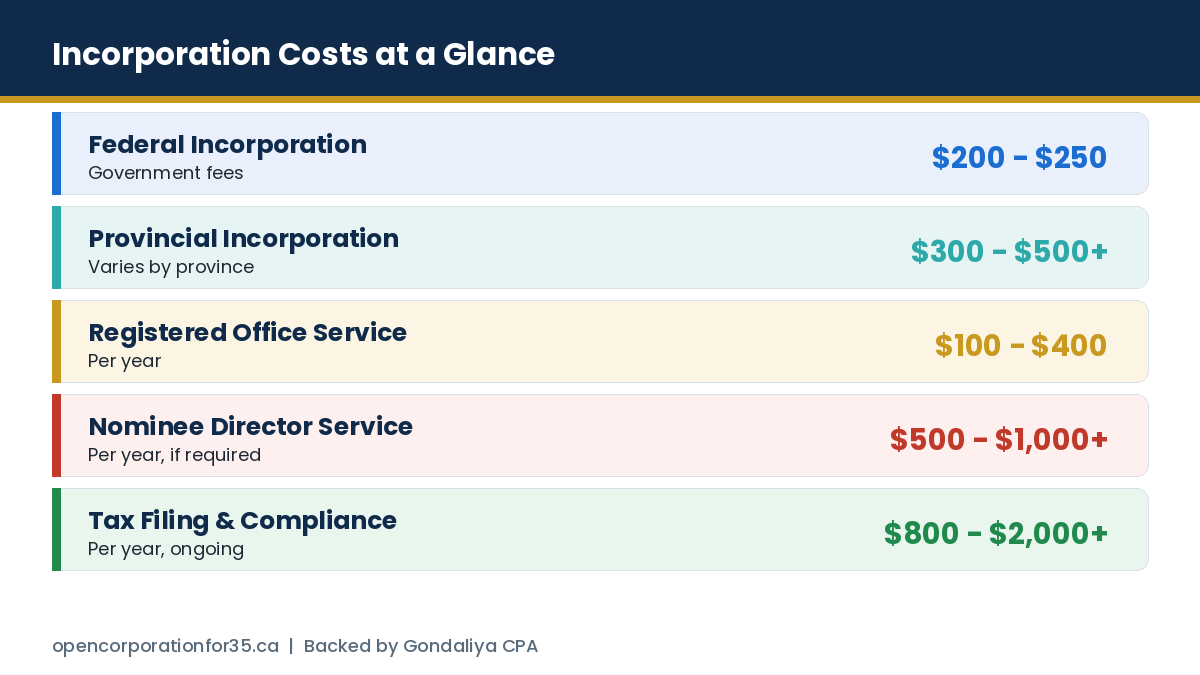
- Government Filing Fees: You pay different fees if you incorporate federally or provincially. Federal fees are usually $200 to $250. Provincial fees change depending on the province.
- Registered Office Address: Some provinces ask for a physical office address there. Using services for this can add monthly or yearly fees.
- Director Service Fees: If residency rules apply, non-residents might need nominee directors. That can cost extra.
- Bank Account Setup: Foreign entrepreneurs may face minimum deposits or bank fees when opening a Canadian business account.
- Tax Filing Costs: Every corporation files tax returns with the CRA yearly. Hiring accountants adds ongoing costs.
Knowing these costs helps prevent open corporation Canada errors around money planning.
Common Mistakes by Foreign Entrepreneurs
Watch Out
Many foreign founders don’t count all expenses when they start. They often:
- Miss fee differences between federal and provincial filings
- Forget nominee director charges
- Underestimate how tricky banking can be for foreigners
- Skip budgeting for tax filings and compliance
Thinking ahead about these points makes it easier to follow Canada business compliance without surprises.
Pricing Table: Incorporation Costs at a Glance
Pricing
| Option | Typical Cost Range | Complexity | Best For |
|---|---|---|---|
| Federal Incorporation | $200–$250 (gov’t fees) | Moderate | Businesses across Canada |
| Provincial Incorporation | $300–$500+ (varies) | Depends on province | Local business operations |
| Registered Office Service | $100–$400/year | Low | Non-residents needing local address |
| Nominee Director Service | $500–$1,000+/year | Moderate | Non-residents with residency rules |
| Bank Account Setup | Varies | Moderate | All foreign-owned firms |
| Tax Filing & Compliance | $800–$2,000+/year | Ongoing | All corporations |
About Open Corporation For $35 Pricing
Our Pricing
Open Corporation For $35 starts at just $35 plus government fees. This is way cheaper than many law firms or accountants who charge hundreds or even thousands without clear price details.
This online setup cuts hidden costs tied to non-resident incorporation mistakes like unnecessary extras or tricky paperwork. It suits foreign founders wanting quick, affordable incorporation.
What You Get With Open Corporation For $35
Choosing Open Corporation For $35 gives you essential services designed for global entrepreneurs who want simple pricing and clear steps.
What’s Included?
| Deliverable | Included |
|---|---|
| Articles of Incorporation | ✓ |
| Corporate Minute Book Template | ✓ |
| Business Number Registration | ✓ |
| Basic Support by Email | ✓ |
| Confirmation Documents | ✓ |
These cover the main legal steps you need to start your corporation right. They help you avoid open corporation Canada errors like missing papers or skipped registrations.
Why It Matters for Foreign Entrepreneurs
Many foreign owners struggle with nominee director problems, virtual office mix-ups, or CRA registration mistakes when they do things alone. This package tackles those issues by providing:
- Easy-to-use templates that cut down legal errors
- Business number registration so CRA knows your company
- Quick email support to reduce confusion during setup
This way, you skip delays caused by common non-resident incorporation mistakes in Canada.
Benefits Table: What You Get vs Traditional Services
| Feature | Open Corporation For $35 |
|---|---|
| Simple Online Process | ✓ |
| Clear Pricing | ✓ |
| Fast Processing | ✓ |
| Made for Non‑Residents | ✓ |
By focusing only on what matters—no extra fluff—Open Corporation For $35 gives good value to digital entrepreneurs who want fast setup without fuss.
Start your incorporation today using an easy online system built for affordability and clarity. You can contact support anytime with questions about prices or next steps to open your Canadian corporation starting at just $35 plus filing fees.
Skip the expensive mistakes
Name search, incorporation filing, registered office address and CRA Business Number registration, all handled remotely for non-resident owners. Please book a free consultation.
Common Mistakes Non-Residents Make When Opening a Corporation in Canada
Common Mistakes Non-Residents Make When Opening a Corporation in Canada
The Mistakes
Opening a corporation in Canada as a non-resident can be tricky. Many foreign entrepreneurs run into common errors. These mistakes come from not knowing the rules around incorporation and compliance. Avoiding them saves you time, money, and stress later on. Here are some frequent non-resident incorporation mistakes and open corporation Canada errors to watch out for.
Treating Incorporation as a Transaction
Many make the mistake of thinking incorporation is just a one-time thing. But it’s really just the start of running your business legally in Canada.
Foreign entrepreneurs often forget they must keep up with filing annual returns and updating records. Missing these tasks can cause fines or even shut down your corporation.
How to avoid this mistake:
- Think of incorporation as part of your long-term plan.
- Set reminders for tax filings and yearly reports.
- Get advice from someone who knows Canadian rules well.
Underestimating Registered Office Requirements
Every Canadian corporation needs a registered office address. This address is where official letters and legal papers arrive. Some non-residents slip up by picking wrong addresses or ignoring the need for a physical location.
Using virtual offices without proper approval or not having anyone physically there to accept mail leads to problems.
Why this matters:
- Your registered office must be inside the province or federal area you choose.
- It makes sure you get important government messages on time.
Tips to follow:
| Requirement | Explanation | How to Meet It |
|---|---|---|
| Physical Address | Needs to be real, no P.O. Boxes | Use commercial mail services allowed by regulators |
| Jurisdiction Compliance | Must match federal or provincial rules | Check rules with the correct authority |
| Availability | Someone should be there during work hours | Hire a local agent if needed |
Ignoring Tax Registration
Another big mistake is skipping tax registration after incorporating. Just because you register your company doesn’t mean taxes are handled automatically.
Not registering for GST/HST or payroll accounts can cause penalties or missed tax credits that hurt your cash flow.
Key tax points:
- Companies making more than $30,000 a year usually need GST/HST registration.
- Hiring employees means separate payroll accounts at CRA.
Check current rules before you start since they change often.
Choosing the Wrong Incorporation Type
Picking federal versus provincial incorporation trips up many foreign entrepreneurs. The choice affects how your business runs and its costs.
| Incorporation Type | Pros | Cons |
|---|---|---|
| Federal | Protects name across Canada | Costs slightly more |
| Provincial (e.g., Ontario) | Cheaper; simpler for local business | Name protection only in that province |
Think about where you want to do business before deciding your corporation type.
Overlooking Banking Challenges
Opening a bank account in Canada can be tough for non-residents. Many ignore this until late in the process, which causes delays.
Banks often want personal ID checks done in person. Some won’t open accounts for companies owned only by foreigners. Plus, international fees can add up if not planned well.
To handle banking issues:
- Look for banks that work with foreign clients.
- Prepare documents like passports, proof of address, and corporate papers early.
- Consider fintech options carefully but check if they suit your needs fully.
Focusing on Low Cost Over Long-Term Value
Trying to save money by picking cheap incorporation services can backfire. Some low-cost options skip important extras like help after registration or ways to avoid future problems.
Choosing just by price risks missing key support that keeps your business safe over time.
Look for providers who offer good value with clear service details—not just low fees upfront.
Neglecting Long-Term Functionality
Failing to plan how your corporation will operate long-term leads to trouble later with compliance and governance:
- No clear shareholder agreements
- Directors not meeting residency rules
- Missing registrations when expanding into new provinces
Long-term functioning means knowing your tax duties, reporting requirements from CRA, local employment laws, and adapting as things change.
Plan ahead by:
- Reviewing governance regularly
- Watching for law updates affecting corporations
- Getting expert help even after setup is done
Avoid these mistakes—don’t treat incorporation like a one-time deal; respect registered office rules; register taxes properly; pick the right incorporation type; prepare for banking needs; balance cost with value; and plan your corporation’s future carefully. This way, non-resident owners can run Canadian companies with fewer risks.
The registered office mistake is the one we see most. Founders assume any mailing address will do, the filing is rejected, and the whole timeline restarts. It has to be a real street address inside the jurisdiction.
Common Mistakes Summary Table
Common Mistakes Summary Table
Summary
| Mistake | Why It’s Risky | How To Avoid It |
|---|---|---|
| Treating Incorporation As Transaction | Leads to missed filings and possible fines | Think long term; track deadlines |
| Underestimating Registered Office Requirements | Missed official mail or legal notices | Use authorized physical addresses within jurisdiction |
| Ignoring Tax Registration | Fines and lost tax credits | Register on time based on revenue & activities |
| Choosing Wrong Incorporation Type | Limits markets; adds admin burden | Pick federal vs provincial carefully |
| Overlooking Banking Challenges | Delays business operations | Prepare docs early; explore banks serving foreigners |
| Focusing Only On Low Cost | Misses support/services needed | Balance cost & full offerings |
| Neglecting Long-Term Functionality | Causes future governance/compliance troubles | Plan governance; watch law changes |
This table shows key areas you should focus on when opening a corporation in Canada as a non-resident.
Watch out for these traps while choosing affordable options made for global founders who want easy access into Canada’s market starting at $35—with clear info all along.
Need help that fits non-resident incorporators looking for simple steps plus expert tips? Reach out anytime.
Realistic Example Scenario: US-Based SaaS Founder Incorporating in Canada
Realistic Example Scenario: US-Based SaaS Founder Incorporating in Canada
Worked Example
Starting a company in Canada while living in the US sounds simple. But many foreign entrepreneurs make mistakes that slow things down or cause legal problems. Let’s look at a real example.
Scenario Overview
| Aspect | Details |
|---|---|
| Business Type | Software-as-a-Service (SaaS) startup |
| Location | United States (Founder), Incorporation: Canada |
| Projected Annual Revenue | $300,000–$500,000 (just an example) |
| Payment Processing | Stripe and other global payment systems |
| Physical Presence | None; fully remote setup |
This founder wants to use Canada’s strong legal system and reach North American markets. They don’t want to move or get Canadian residency.
Common Mistakes Made by Foreign Entrepreneurs
- Ignoring director residency rules Some provinces require directors to live in Canada. Skipping this can stop your incorporation or cause problems later.
- Not doing a proper NUANS name search Missing this step can make your filing get rejected because the name is already taken.
- Underestimating how hard bank accounts are to open remotely Many think they can open a Canadian bank account easily from abroad. But banks ask for strict ID checks and sometimes visits.
- Forgetting about GST/HST tax registration If your business makes enough money, you must register for these taxes. Not doing so risks penalties.
- Using bad registered office addresses Virtual offices may not always meet government rules. This can block important mail or notices.
- Confusing federal and provincial incorporation differences Where you incorporate affects your taxes, paperwork, and operations. It matters which one you pick.
- Missing ongoing compliance deadlines You must file annual reports and update corporate records on time. Ignoring this leads to fines or losing your company.
If you watch out for these errors and get help from services like Open Corporation For $35, you can skip the headaches and focus on growing your business.
Frequently Asked Questions
Frequently Asked Questions
FAQ
Can I incorporate without visiting Canada?+
Yes. You don’t need to visit Canada to start your company there. Many services let you file everything online while following all the federal or provincial rules.
This saves you money on travel and gets your business going faster. Just make sure you avoid common non-resident incorporation mistakes when doing it remotely.
Do I need a Canadian bank account?+
It’s best to have one, but not required at first. A Canadian bank account helps with payments and looks more professional to clients inside Canada.
Opening one from abroad can be tricky though. Banks require strict identity checks that might need notarized papers or even an in-person visit depending on the bank.
Can I own 100% of the company as a foreigner?+
Yes, foreigners can own all the shares in most Canadian companies whether incorporated federally or provincially.
But remember, some provinces still want some directors to live inside Canada even if you own all the stock yourself.
Do I need a visa to incorporate in Canada?+
No visa is needed just to form your corporation if you won’t be moving there.
If you want to actually live or work inside Canada beyond managing your business remotely, then visas come into play.
Can I use a virtual address for my registered office?+
Yes, but only if the address meets official requirements:
- It must accept government mail reliably
- It can’t be just any PO box
- Rules differ by province, so check carefully
Using an unapproved virtual address is a common non-resident incorporation mistake that can cause missed notices and legal trouble.
Understanding these real-world examples helps avoid typical errors for foreign entrepreneurs using Open Corporation For $35 services. This way, starting your company in Canada won’t get stuck on paperwork or compliance issues—and you keep focus where it counts: on building your business.
Why Choose Open Corporation For $35?
Why Choose Open Corporation For $35?
Why Us
Picking the right service to open a corporation in Canada matters a lot, especially for non-residents. Many foreign entrepreneurs fall into traps like non-resident incorporation mistakes, open corporation Canada errors, and issues with Canada business compliance. Open Corporation For $35 offers a simple, budget-friendly way to avoid these problems.
What You Get
- Low cost: Incorporation starts at just $35, cheaper than lawyers or CPAs.
- Easy online process: Perfect for busy foreign founders who want to skip complicated forms.
- Clear fees: No surprise charges; government filing fees are shown separately.
- Know-how about non-resident needs: Helps avoid common mistakes made by foreign business owners.
- Fast service: Get your company started quickly.
- Compliance help for foreigners: Tips on how to stay legal and avoid compliance troubles.
Common Mistakes To Skip
Non-residents often make some costly errors when they try to open a company in Canada:
| Mistake | Why It’s Risky | How Open Corporation For $35 Helps |
|---|---|---|
| Wrong director residency info | Filings can get rejected or lead to fines | Clear advice on residency rules |
| Picking the wrong jurisdiction | Raises costs or causes tax headaches | Help choosing federal vs provincial incorporation |
| Forgetting CRA registration | Can cause fines or delay tax benefits | Support registering GST/HST if needed |
| Delays in opening bank accounts | Slows down money flow and daily operations | Guidance on banking for foreigners |
Open Corporation For $35 cuts down these risks with expert advice tailored for foreign entrepreneurs.
Next Steps
Starting your Canadian corporation can feel tricky, but it doesn’t have to be. To dodge common problems like non-resident incorporation mistakes, open corporation Canada errors, and other foreign entrepreneur pitfalls, try this:
- Check your business goals and make sure you qualify as a non-resident founder.
- Decide on federal or provincial incorporation—get advice if you’re unsure.
- Pick an affordable online service like Open Corporation For $35 that knows how to help foreigners set up fast and right.
- Gather your documents—company name search, director info—and submit them online easily.
- Register for important accounts like Business Number (BN) and GST/HST if needed.
- Set up a Canadian bank account early with providers used to working with international clients.
Following these steps helps avoid delays caused by mistakes new foreign incorporators often make.
Professional Guidance on Avoiding These Mistakes: How Open Corporation For $35 Helps
Professional Guidance and Quick Reference
Guidance
Almost every mistake on this list traces back to one of three things: the wrong address, the wrong jurisdiction, or the assumption that filing once is the end of it. Fix those three and the rest largely take care of themselves.
Open Corporation For $35, backed by Gondaliya CPA, handles the whole chain in one pass: the name search, the incorporation filing, the registered office address, the Business Number and the program accounts.
Everything is done remotely. No travel to Canada is required to incorporate or register.
Quick Answers: Key Numbers & Concepts at a Glance
At a Glance
- Federal director residency: 25% resident Canadians
- Ontario and British Columbia: No residency rule
- Alberta director residency: 25%
- Federal filing fee: $200 to $250
- Provincial filing fee: $300 to $500 and up
- Registered office service: $100 to $400 a year
- Nominee director: $500 to $1,000 and up a year
- Annual tax and compliance: $800 to $2,000 and up
- GST/HST threshold: $30,000 a year
- Name search to registration: Roughly 4 to 10 days
Who This Is For / Not For
Fit Check
- For: Foreign founders about to incorporate, owners who have already filed and want to check what they missed, anyone weighing a nominee director, and SaaS or e-commerce owners setting up remotely.
- Not For: People hoping a company will support an immigration application, since it grants no status, and businesses in regulated sectors that carry foreign ownership limits.
People Also Ask
Quick Answers
I already incorporated. What should I check first?+
Three things: that your registered office is a real street address in the right jurisdiction, that your Business Number and any GST/HST account are actually open, and that your annual return is diarised.
Is a nominee director the only way to meet the residency rule?+
No, and it is usually the worse option. Incorporating in a jurisdiction with no residency requirement removes the annual fee and the loss of control entirely.
What happens if I miss an annual return?+
The corporation can be administratively dissolved, meaning it stops legally existing. Reinstating it costs more in time and fees than the returns would have.
Glossary of Key Terms
Plain-English Definitions
- Registered office: The official street address of the corporation in its jurisdiction.
- Nominee director: A director appointed to satisfy a residency requirement.
- NUANS: The name search report confirming your proposed name is available.
- Business Number (BN): The nine-digit CRA identifier every tax account attaches to.
- Program account: A specific CRA account such as GST/HST or payroll.
- Annual return: The yearly filing that keeps the corporation in good standing.
- Administrative dissolution: Removal from the register for missed filings.
- Extra-provincial registration: Registering to operate outside your home province.
- Minute book: The corporate record holding bylaws, resolutions and share registers.
- Shareholder agreement: The contract setting out how owners deal with each other.
Get the address right, pick the jurisdiction on director rules rather than fee alone, open the CRA accounts straight after incorporation, and diarise the annual filings on day one. Those four decisions prevent almost every mistake described above.
Mistake Risk Check
This quick self-check flags which mistakes you are most exposed to. Please answer the six questions below.
Mistake Risk Check
Six quick questions on your plans. No fee quoted.
Mistakes you are exposed to:
This is a general prompt, not tax or legal advice or a quote. Your position depends on your full facts, so for a real review please book a free consultation.
Want a checklist to work from? Please download our free mistake-avoidance checklist before your consultation.
Get it right the first time, from $35
Jurisdiction advice, name search, incorporation, registered office address and CRA registrations, all set up together and handled entirely remotely. Please book a free consultation.
What to Send Us
Send us your preferred company name, whether any director lives in Canada, the province or provinces you will trade in, and whether you already have a Canadian address. We will confirm the jurisdiction and handle the whole registration remotely.
Published: April 13, 2026 · Last updated: April 13, 2026
Editorial policy: Our content is prepared by our team and reviewed by Sharad Gondaliya, CPA, and we update it as incorporation rules, fees and CRA thresholds change.
Disclaimer: This article is educational information only and is not tax, legal, or financial advice. Fees, thresholds and processing times change, and outcomes depend on your specific facts. Please consult a CPA before acting.