
Incorporate a Franchise for $35
Start your franchise corporation for $35, HST included. Government fees are separate. A CPA reads the agreement and the fee class before we file.
Franchises operated in Ontario are governed by the Arthur Wishart Act (Franchise Disclosure), 2000, whose section 5 puts the disclosure document in your hands at least 14 days before you sign or pay. We prepare and file your corporation for $35.00, HST included, and show the registry charge at the government’s own figure. Open Corporation for $35 is a department of Gondaliya CPA.
Your initial franchise fee is capital and belongs in Class 14 or Class 14.1, not in first-year expenses. A Chartered Professional Accountant reads the agreement, including any royalty leaving Canada under paragraph 212(1)(d) of the Income Tax Act.
Why Franchise Owners Incorporate
Most franchisors require it. The agreement is granted to a corporation and you sign a personal guarantee beside it, so the company must exist before the signing date. Signing personally means assigning the agreement later, which triggers franchisor consent and a transfer fee.
The initial franchise fee is capital, not a deduction. A fixed term makes it a Class 14 asset written off straight line over its life; a perpetual right is Class 14.1 at 5%.
Franchise debt is repaid out of taxed profit. Active business income inside the $500,000 federal business limit is taxed at 9% federally and 3.2% in Ontario, a combined 12.2%.
Our Official Partners









Rules That Apply to a Franchise Corporation
There is no professional corporation here. Franchising is not a regulated profession: no college issues a certificate of authorization and no statute restricts who may hold a share. You incorporate an ordinary corporation under the Business Corporations Act (Ontario) or federally.
Typical Share Structure for a Franchise Corporation
| Share class | Who holds it | Voting | Dividend entitlement | Why it is there |
|---|---|---|---|---|
| Class A common | The operating franchisee | Yes | Discretionary | Control, and the name the franchisor approves |
| Class B common | A spouse working in the unit | Yes | Discretionary | Splitting, if a TOSI exception is met |
| Class C non-voting common | An adult child in the business | No | Discretionary | Profit share without a change of control |
| Class D preferred | The founding owner | No | Fixed, redeemable | Freezes value before a second unit |
| Class E common | A holding company | Yes | Discretionary | Moves surplus up for the next unit |
Section 120.4 of the Income Tax Act decides whether the Class B and Class C shares can be paid anything. A food or retail franchise often clears the excluded shares test, which fails only where 90% or more of business income is from services. That shareholder must be 25 or older and hold 10% or more of the votes and of the fair market value.
The alternative is the excluded business exception, an average of at least 20 hours a week, proved by a shift roster. A CPA tests each shareholder before the dividend is declared.
HST for Franchise Owners
Almost every franchise supplies taxable goods or services at 13% in Ontario. Nothing here is exempt, and only a grocery-style franchise has zero-rated lines under Part III of Schedule VI to the Excise Tax Act.
Common CRA Issues for Franchise Owners
The initial franchise fee deducted in full
Triggered by a large franchise fee expense in the first-year income statement. It is capital, and belongs in Class 14 or Class 14.1.
The wrong class for the fee
Triggered by a fixed-term agreement the return treats as perpetual, or the reverse. The two give very different first-year deductions.
Royalties paid abroad without withholding
Triggered by a foreign franchisor and a royalty expense with no Part XIII remittance. Paragraph 212(1)(d) of the Income Tax Act imposes 25%, reduced to 10% under Article XII of the Canada-United States tax treaty.
Two units, two full small business deductions
Triggered by a second corporation claiming its own $500,000 limit. Section 256 of the Income Tax Act associates corporations under common control, and one limit is allocated on Schedule 23.
Sales that do not match the royalty reports
Triggered by the franchisor’s royalty statements, an independent record of gross sales, read against the T2 and HST returns. Shareholder benefits under subsection 15(1) surface the same way.
The normal reassessment period for a CCPC is three years under subsection 152(3.1); paragraph 152(4)(a) removes it for misrepresentation from carelessness or wilful default.
First-Year Compliance Calendar
| When | What is due | Who files it | What happens if it is late |
|---|---|---|---|
| At least 14 days before signing or paying | Franchisor’s disclosure document received | The franchisor, to you, under the Arthur Wishart Act | Rescission runs 60 days, or two years if never given |
| Before the agreement is signed | Corporation incorporated and named as franchisee | Us, Ontario Business Registry or Corporations Canada | Assignment later, with consent and a transfer fee |
| Before the initial franchise fee is paid | HST registration, voluntary | Your CPA, with the CRA | The credit on the fee and build-out is lost |
| Within 60 days of incorporation | Initial Return, Corporations Information Act | Us, Ontario Business Registry | Non-compliance. No fee |
| Week 1 to 2 | Business number, RC0001 tax and RP0001 payroll accounts | Your CPA, with the CRA | Nothing to remit deductions against |
| 15th of each month | Payroll source deductions for unit staff | The corporation, to the CRA | Penalty of 3% to 10%, 20% on a repeat |
| 15th of the month after a royalty is paid to a non-resident | Part XIII withholding remitted | The corporation, to the CRA | Payer liable for the tax, plus penalty and interest |
| One month or three months after each period end | HST return, monthly or quarterly filer | Your CPA, with the CRA | Late filing and instalment interest |
| Within 53 weeks of incorporation | First fiscal year end chosen | Your CPA | Hard to change once the first T2 is filed |
| 31 March following the calendar year | NR4 information return for royalties paid abroad | Your CPA, with the CRA | Late filing penalty per slip |
| 3 months after year end | Part I tax balance for a CCPC | The corporation, to the CRA | Interest from the day after |
| 6 months after year end | T2 return and Ontario Annual Return | Your CPA, and us | Late penalty, then cancellation of the corporation |
| First tax year | No corporate instalments | Nothing to file | Instalments begin in year two past $3,000 of tax |
We read the franchise agreement and the disclosure document before the articles are filed.
The term of the right
It decides whether the initial fee is a Class 14 asset amortized over that term or a Class 14.1 asset at 5%. That is worth thousands in year one.
The franchisee entity
Who the franchisor will accept, and which shareholders it wants named and guaranteeing. Changing the share register later is a change of control needing consent.
Where the franchisor lives
If royalties leave Canada, Part XIII withholding applies at 25%, or 10% under the Canada-United States tax treaty, from the first payment.
Family dividends
Whether a spouse or adult child can be paid, tested against section 120.4. A goods-based franchise usually has room here; a services franchise often does not.
One unit or five
If more are coming, we decide now whether each unit gets its own corporation, whether a holding company sits above them, and how section 256 divides the limit.
The fiscal year end
Set away from your heaviest trading month and the franchisor’s reporting date.
HST timing
Registration timing, filing frequency and method, calculated against the fit-out budget.
The lease and guarantee
Which entity signs each, and what that costs in tax.
Fees to Incorporate a Franchise
Our fee is $35.00 with HST included. The registry charge is shown at the government’s own figure. Franchisor fees appear in your disclosure document.
| Item | Amount | HST | Total | Who charges it |
|---|---|---|---|---|
| Incorporation preparation and filing | $35.00 | Included | $35.00 | Open Corporation for $35 |
| Ontario articles of incorporation, online | $300.00 | None | $300.00 | Ontario Business Registry |
| Federal articles of incorporation, online | $200.00 | None | $200.00 | Corporations Canada |
| Ontario-biased NUANS report, named company only | $25.00 | Included | $25.00 | Open Corporation for $35 |
| Federal NUANS name search, named company only | $38.00 | Included | $38.00 | Open Corporation for $35 |
| Ontario Initial and Annual Returns | $0.00 | None | $0.00 | Ontario Business Registry |
| Federal annual return | $12.00 | None | $12.00 | Corporations Canada |
| Certificate of Status, Ontario | $26.00 | None | $26.00 | Ontario Business Registry |
| Bookkeeping, payroll, HST and T2 | Quoted on request | Gondaliya CPA | ||
| Total, Ontario numbered / named corporation | $335.00 / $360.00 | One-time | ||
| Total, federal numbered / named corporation | $235.00 / $273.00 | One-time | ||
The Bundle for Franchise Owners
After incorporation the work moves to the parent firm. Gondaliya CPA ties gross sales to the franchisor’s royalty reports, records the franchise fee in the correct capital cost allowance class, treats royalty and advertising fund payments correctly for income tax and HST, handles Part XIII withholding and NR4 slips, runs payroll, and prepares the HST returns and the T2.
Why Franchise Owners Use Us

Gondaliya CPA Professional Corporation is registered with CPA Ontario under firm registration number 61330051. Open Corporation for $35 is a department of Gondaliya CPA.
- CPA Ontario firm registration number 61330051
- 1,300+ five-star Google reviews
- 13 Ontario offices
- Open 9:00 AM to 8:30 PM, Monday to Sunday
- 30-day money-back guarantee
- 60-day fee-matching policy
- Xero Partner Award Winner 2026
Google Reviews
Free CPA Consultation for Franchise Owners
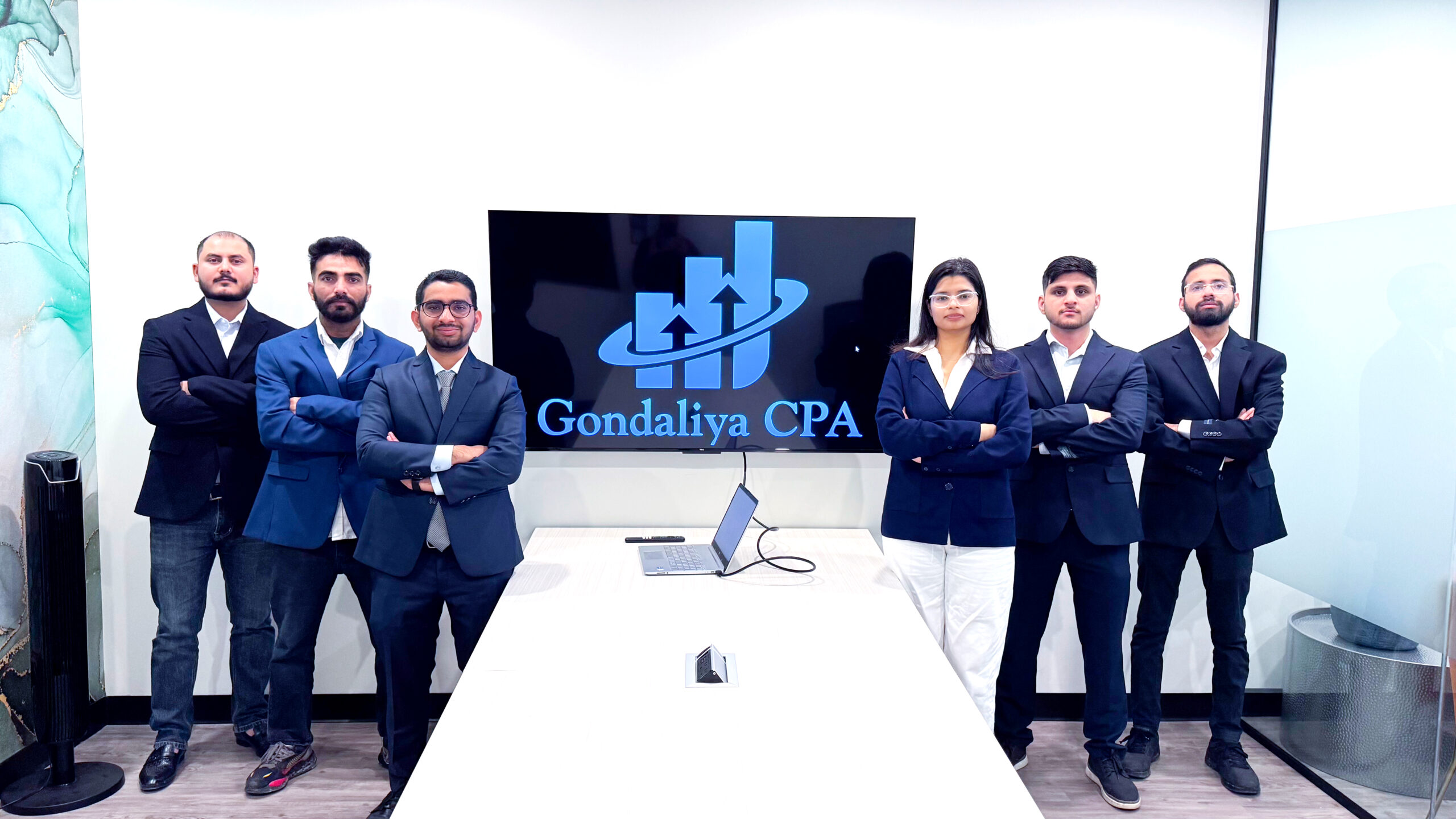
The CPAs Who Review Your Franchise Corporation
A Chartered Professional Accountant reads the agreement and the fee class before anything is filed.


What Our Clients Say
These Google reviews belong to Gondaliya CPA Professional Corporation and cover every service the firm provides. See all reviews.
Franchise Incorporation FAQs
Do I need a corporation to buy a franchise in Ontario?
How long before signing must a franchisor give me the disclosure document?
What happens if the franchisor never gave me a disclosure document?
Can I deduct the initial franchise fee in the year I pay it?
Are royalties and advertising fund contributions deductible?
Do I withhold tax on royalties paid to a United States franchisor?
If I open a second unit, does each corporation get its own small business deduction?
When must a franchisee register for HST?
Related Industries We Serve
Quick-Service Restaurants
- Royalty and ad fund reconciliation
- Food and beverage HST lines
- Shift payroll and tips
Convenience and Retail Stores
- Quick method at 4.4%
- Inventory and point-of-sale records
- Multi-unit holding structure
Fitness Studios
- Membership revenue timing
- Equipment financing and CCA
- Trainer contractor status
Home Services Franchises
- Territory fee capital treatment
- Vehicle and crew costs
- WSIB and payroll
Beat Your Franchisor’s Signing Date
Your franchisor set the signing date. One form puts the corporation in place before it, at $35 including HST, checked by a CPA.
No legal advice. Gondaliya CPA Professional Corporation is a firm of Chartered Professional Accountants licensed by CPA Ontario, firm registration number 61330051. It is not a law firm. We prepare and file corporate documents and we provide accounting and tax advice. Nothing on this page is legal advice, and reading it creates no solicitor and client relationship. For legal advice, including advice on a shareholder agreement before you sign it, consult a lawyer licensed in the province where your corporation carries on business.