
Incorporate a Grocery or Convenience Store for $35
Start your grocery or convenience store corporation for $35, HST included. Government fees are separate. A CPA sets up the HST split and the licence holder before we file.
A grocery or convenience store is an ordinary business corporation under the Business Corporations Act (Ontario) or the Canada Business Corporations Act. No college certifies it and no statute limits who may hold a share. We prepare and file your corporation for $35.00, HST included, and show the registry charge at the government’s own figure. Open Corporation for $35 is a department of Gondaliya CPA.
What makes a store different is the till. Basic groceries are zero-rated under Part III of Schedule VI to the Excise Tax Act, while snacks, soft drinks, tobacco, beer and wine carry 13%. Lottery tickets are sold for the Ontario Lottery and Gaming Corporation, not for you. A Chartered Professional Accountant maps each of those lines before the first sale is rung through.
AFFORDABLE Incorporation for Grocery and Convenience Store Owners
The licences belong to whoever holds them. The AGCO beer and wine licence, the OLG retailer agreement, the lease and the supplier accounts are issued to a named holder. Put them in the corporation from day one, because moving them out of your personal name later means new applications and landlord consent.
Store margins are thin and profits are reinvested in stock, coolers and fixtures. Active business income inside the $500,000 federal business limit is taxed at 9% federally and 3.2% in Ontario, a combined 12.2%, so more of each dollar stays available for inventory and debt.
The corporation also stands between your house and the store’s lease, supplier credit and customer claims. It never protects you from unremitted payroll deductions or HST, which directors can be assessed for personally.
Our Official Partners









Rules That Apply to a Grocery or Convenience Store Corporation
There is no professional corporation here. You incorporate an ordinary corporation provincially or federally, and the rules that matter attach to what the store sells: alcohol, tobacco, lottery and food.
Typical Share Structure for a Store Corporation
| Share class | Who holds it | Voting | Dividend entitlement | Why it is there |
|---|---|---|---|---|
| Class A common | The owner-operator | Yes | Discretionary | Control, and the name on the licences |
| Class B common | A spouse working shifts in the store | Yes | Discretionary | Splitting, if a TOSI exception is met |
| Class C non-voting common | An adult child working in the store | No | Discretionary | Profit share without a change of control |
| Class D preferred | The founding owner | No | Fixed, redeemable | Freezes value before a second store or a sale |
| Class E common | A holding company | Yes | Discretionary | Moves surplus up for the building or the next store |
Section 120.4 of the Income Tax Act decides whether the Class B and Class C shares can be paid anything. A store selling goods usually clears the excluded shares test, which fails only where 90% or more of business income is from services. That shareholder must be 25 or older and hold 10% or more of the votes and of the fair market value.
Family stores often meet the other route too, the excluded business exception: an average of at least 20 hours a week, proved by the shift schedule and payroll. A CPA tests each shareholder before the dividend is declared.
HST for Grocery and Convenience Stores
A store sells at two rates through one till. Basic groceries are zero-rated, 0% but still a taxable supply, while the exclusions listed in section 1 of Part III of Schedule VI to the Excise Tax Act carry 13% in Ontario: soft drinks, candy and confectionery, chips and salty snacks, snack bars, most single-serve drinks and prepared food.
Common CRA Issues for Grocery and Convenience Stores
Cash sales the CRA thinks are missing
Triggered by a gross margin below the industry norm, or deposits that do not match the point-of-sale reports. The CRA reconstructs income from purchases and markups, and a net worth assessment can follow.
The wrong split between 0% and 13%
Triggered by a till that codes chips, pop or prepared food as basic groceries. The CRA assesses the HST that should have been collected, whether or not the customer paid it.
Refund claims that invite review
Triggered by a run of HST refunds from a mostly zero-rated store. They are legitimate, but every input tax credit needs an invoice showing the supplier’s registration number.
Stock taken home
Triggered by shrinkage well above normal. Groceries, cigarettes or beer taken by the family are a shareholder benefit under subsection 15(1) unless recorded, and HST applies to the taxable lines.
Lottery receipts booked as sales
Triggered by gross sales inflated by OLG ticket and prize cash. It distorts the margin, the HST return and the instalment base. Only the commission is the store’s income.
The normal reassessment period for a CCPC is three years under subsection 152(3.1); paragraph 152(4)(a) removes it for misrepresentation from carelessness or wilful default.
First-Year Compliance Calendar
| When | What is due | Who files it | What happens if it is late |
|---|---|---|---|
| Before the lease or purchase agreement is signed | Corporation incorporated and named as tenant or buyer | Us, Ontario Business Registry or Corporations Canada | Assignment later, with landlord consent |
| Before the AGCO and OLG applications | Corporation in place as applicant | You, with the AGCO and OLG | A fresh application if the holder changes |
| Before the store opens or the purchase closes | HST registration, and Form GST44 for a purchase of the business | Your CPA, with the CRA | HST on the price, or lost credits on the fit-out |
| Within 60 days of incorporation | Initial Return, Corporations Information Act | Us, Ontario Business Registry | Non-compliance. No fee |
| Week 1 to 2 | Business number, RT0001 HST and RP0001 payroll accounts | Your CPA, with the CRA | Nothing to remit tax or deductions against |
| Within 10 days of hiring the first worker | WSIB registration, where the store’s class is covered | The corporation, with the WSIB | Premiums assessed back to the start, plus penalties |
| 15th of each month | Payroll source deductions for store staff | The corporation, to the CRA | Penalty of 3% to 10%, 20% on a repeat |
| One month or three months after each period end | HST return, monthly or quarterly filer | Your CPA, with the CRA | Late filing penalty and interest |
| Within 53 weeks of incorporation | First fiscal year end chosen, and a stock count on that date | Your CPA | Hard to change once the first T2 is filed |
| Last day of February | T4 slips and summary for store staff | Your CPA, with the CRA | Late filing penalty per slip |
| 3 months after year end | Part I tax balance for a CCPC | The corporation, to the CRA | Interest from the day after |
| 6 months after year end | T2 return and Ontario Annual Return | Your CPA, and us | Late penalty, then cancellation of the corporation |
| First tax year | No corporate instalments | Nothing to file | Instalments begin in year two past $3,000 of tax |
We start with what the store will sell and how it will be bought, because those decide the HST, the licences and who must sign.
Start-up or purchase
For a purchase, whether you buy shares or assets, how the price splits between inventory, equipment and goodwill, and whether section 167 removes HST from the closing.
The licence holder
Which entity applies to the AGCO, signs the OLG agreement and the lease, and who gives the personal guarantee beside it.
The product mix
Roughly how sales divide between zero-rated groceries and taxable lines. It decides refunds, filing frequency and whether the quick method pays.
The point-of-sale setup
Tax codes by item, the $4 prepared food rebate, and lottery kept outside sales, before the first day of trading.
Family dividends
Whether a spouse or adult child can be paid, tested against section 120.4 using the shift schedule and the share terms.
The building
Whether the property sits in the store corporation, a sister company or a holding company, and how section 256 divides the $500,000 limit.
The fiscal year end
Set away from the December rush, on a date you can count stock properly.
Cash controls
Daily Z-reports, deposits that match them, and records good enough to answer a margin audit.
AFFORDABLE Incorporation Pricing for Store Owners
Our fee is $35.00 with HST included. Government filing fees are passed through at cost with no mark-up, and every total below is final.
Ontario Provincial Incorporation
| Service | Final Fee | Frequency |
|---|---|---|
| Ontario named corporation – Government filing CAD 300 + NUANS CAD 25 + our incorporation fee CAD 35 | CAD 360 | One-time |
| Ontario numbered corporation – Government filing CAD 300 + our incorporation fee CAD 35 | CAD 335 | One-time |
| Our professional incorporation fee component | CAD 35 | One-time |
| NUANS name search | CAD 25 | One-time |
| Annual Virtual Registered Address Service Package | CAD 900 | Annual |
Federal Incorporation – Based in Ontario
| Service | Final Fee | Frequency |
|---|---|---|
| Federal named corporation based in Ontario – Government filing CAD 200 + NUANS CAD 38 + our incorporation fee CAD 35 | CAD 273 | One-time |
| Federal numbered corporation based in Ontario – Government filing CAD 200 + our incorporation fee CAD 35 | CAD 235 | One-time |
| Our professional incorporation fee component | CAD 35 | One-time |
| Federal NUANS name search based in Ontario | CAD 38 | One-time |
| Annual Virtual Registered Address Service Package | CAD 900 | Annual |
Our Services for Grocery and Convenience Store Owners
Our professional fees include HST. Government fees are separate, itemised and charged at cost with no mark-up.
NUANS Report for Store Owners
The name search report a named store corporation needs, with your choices screened before one is bought. A numbered company with the store name registered as a business name needs none.
Incorporation Service for Store Owners
Articles drafted for the family and the deal you actually have, share classes authorised for later, and the corporation in place before the lease, the closing and the licence applications.
Address Service for Store Owners
A registered office address in downtown Toronto, so your home address stays off the public register and corporate mail does not sit at the store counter.
Payroll Service for Store Owners
The payroll account opened before the first shift, source deductions worked out each pay run for cashiers and family members, and T4 slips filed before the February deadline.
One Window Service for Store Owners
The articles, the business number, the HST and payroll accounts and the first year of filings handled through one person, so nothing waits between offices.
Corporate Annual Filing for Store Owners
The Ontario Annual Return or the federal annual return filed on time, with director, officer and address changes reported, so the corporation stays in good standing for the AGCO and the bank.
Corporate Tax Filing for Store Owners
The T2 with GIFI statements, prepared from books that keep zero-rated and taxable sales apart and lottery cash out of revenue, filed before the six-month deadline.
Federal Incorporation for Store Owners
A federal corporation for an owner planning stores in more than one province, with the name protected nationally and the director residency rule checked first.
Holding Company Setup for Store Owners
A holding company above the store or beside it for the building, set up so profit can move up and the $500,000 small business limit is shared deliberately.
The Bundle for Store Owners
After incorporation the work moves to the parent firm. Gondaliya CPA reconciles daily till reports to bank deposits, keeps zero-rated and taxable sales apart, separates OLG lottery cash from store revenue, tracks inventory and shrinkage, runs payroll for shift staff, and prepares the HST returns, the T2 and the statements a lender or buyer asks for.
Why Store Owners Use Us

Gondaliya CPA Professional Corporation is registered with CPA Ontario under firm registration number 61330051. Open Corporation for $35 is a department of Gondaliya CPA.
- CPA Ontario firm registration number 61330051
- 1,300+ five-star Google reviews
- 13 Ontario offices
- Open 9:00 AM to 8:30 PM, Monday to Sunday
- 30-day money-back guarantee
- 60-day fee-matching policy
- Xero Partner Award Winner 2026
Google Reviews
Free CPA Consultation for Store Owners
Case Studies: Grocery and Convenience Store Incorporation
Three Ontario store files, each showing where the owner started and what changed before anything went to the registry.
Brampton Convenience Store – A Purchase About to Close in the Wrong Name
The problem: A buyer had signed an agreement to buy a Brampton convenience store in his own name, with the closing three weeks away. The landlord, the beer and wine licence application and the lottery terminal were all waiting on whoever ended up owning the business, and nobody had raised HST on the purchase price.
What we did: We incorporated a numbered Ontario company before the closing, so the lawyer could assign the agreement to it and the landlord could approve the corporation as tenant. We registered the corporation for HST and prepared the section 167 election on Form GST44, signed by both parties, for the closing.
The result:
- Numbered Ontario corporation filed at $335.00
- Lease and licence applications in the corporation’s name
- GST44 election ready, no HST on the business price
Scarborough Grocery – A Family on the Shift Schedule, One Name on the Shares
The problem: A husband and wife were opening a South Asian grocery in Scarborough with their 26-year-old son working the evening shifts. The draft they had found online gave every share to the husband, and the year end defaulted to 31 December, in the middle of the holiday rush and the stock count.
What we did: We authorised voting and non-voting common classes and a preferred class at the same registry fee, issued shares to the wife and son as owners working in the store, and tested both against section 120.4 before any dividend. The year end was moved to a quieter month the family could count stock in.
The result:
- Three share classes authorised at no extra registry cost
- Family shareholdings tested before the first dividend
- Year end set away from December
Hamilton Convenience Store – A Hot Food Counter and a Till Set Up Wrong
The problem: An owner in Hamilton was opening a convenience store with a coffee and hot food counter. The point-of-sale vendor had loaded every food item at 0%, there was no HST account, and the fit-out invoices for coolers and counters carried thousands of dollars of tax.
What we did: We incorporated, registered the corporation for HST before opening, and gave the vendor a coding list: basic groceries at 0%, snacks and soft drinks at 13%, and prepared food at 13% with the Ontario point-of-sale rebate applied at $4.00 or less. Lottery sales were kept out of store revenue from the first day.
The result:
- HST account live before the first sale
- Tax on coolers and fit-out claimed as input tax credits
- Till coded correctly before opening day
Six steps from the intake form to a corporation that can sign the lease, apply to the AGCO and open its bank account. You always know what is with us, what is with the registry and what comes next.
Send the intake form
Owners, shares, the store address, whether you are buying or starting, and the dates you are working to: the lease, the closing or the licence application. It takes about ten minutes.
A CPA reviews the file
Who holds which class, who signs the lease and guarantee, whether a spouse or adult child should hold shares, and where the year end should fall. Questions come back the same working day.
Numbered or named
A numbered company needs no search. A named one needs a NUANS report, $25 for Ontario or $38 federally, and we screen your choices before paying for one.
You approve the draft
You see the articles, the share classes, the directors and the registered office before anything is submitted. Changes cost nothing at this stage.
Filed online
Ontario articles go through the Ontario Business Registry and federal articles through Corporations Canada. An online filing is processed on submission and the certificate is emailed to you.
Set up to trade
The Initial Return within 60 days, the business number, the HST and payroll accounts, and the minute book and registers, ready for the bank, the landlord and the AGCO.
Meet the Lead CPAs Behind Your Store Corporation
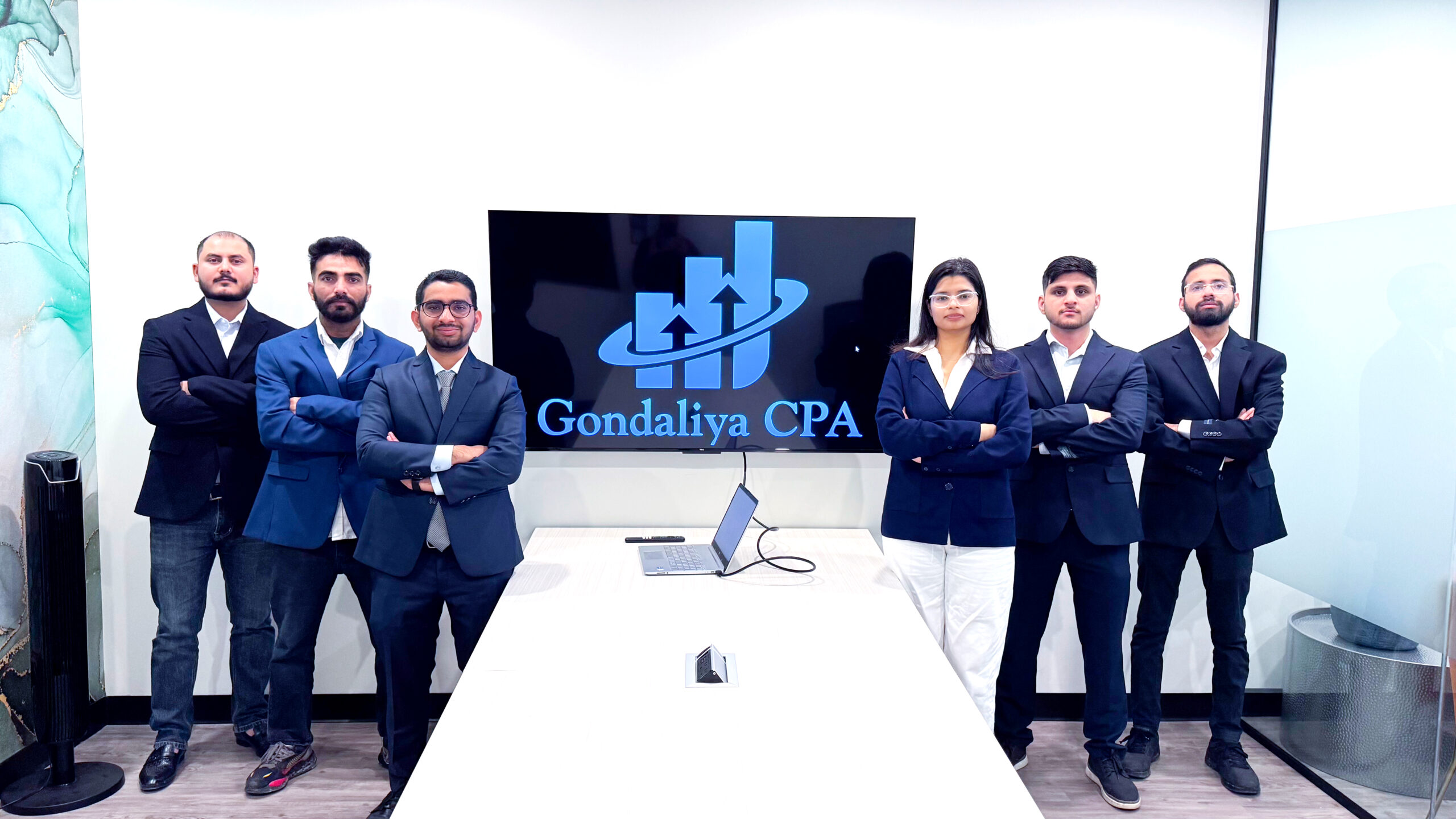
A Chartered Professional Accountant checks the licence holder, the HST setup and the share classes before anything is filed.


What Our Clients Say
These Google reviews belong to Gondaliya CPA Professional Corporation and cover every service the firm provides. See all reviews.
Incorporating a Grocery or Convenience Store Anywhere in Canada
We incorporate stores from thirteen Ontario offices and remotely across Canada. The filing is electronic, so no visit is needed. The Ontario rules on this page apply to Ontario stores. A store elsewhere is filed federally or in its own province, and we confirm that registry’s fee in writing first.
Grocery and Convenience Store Incorporation FAQs
How much does it cost to incorporate a grocery or convenience store in Ontario?
Should I incorporate before buying a convenience store?
Do grocery stores charge HST on food?
Does a store with mostly zero-rated sales need to register for HST?
Do I pay HST when I buy an existing grocery or convenience store?
Can my convenience store sell beer and wine in Ontario?
Are lottery ticket sales part of my store’s revenue?
Should my store be a numbered or a named company?
Can I pay my spouse and children from the store corporation?
Should the building be in the same corporation as the store?
Should I incorporate my store in Ontario or federally?
What tax rate will my store corporation pay?
How far back can the CRA reassess a cash-heavy store, and what records should I keep?
Related Industries We Serve
Franchise Owners
- Banner convenience franchises
- Franchise fee in Class 14
- Royalty reconciliation
Food Importers
- Imported stock for ethnic grocers
- Zero-rated basic groceries
- Customs and landed cost records
Food Processors
- Bakery and prepared food lines
- Ontario manufacturing rate
- Equipment CCA from year one
Restaurants and Takeout
- Prepared food HST
- The $4 Ontario rebate
- Shift payroll and tips
Start Your Store Corporation
Get the corporation in place before the lease, the closing and the licence applications. Pay $35 including HST, and a CPA checks the HST setup, the licence holder and the shares first.
No legal advice. Gondaliya CPA Professional Corporation is a firm of Chartered Professional Accountants licensed by CPA Ontario, firm registration number 61330051. It is not a law firm. We prepare and file corporate documents and we provide accounting and tax advice. Nothing on this page is legal advice, and reading it creates no solicitor and client relationship. For legal advice, including advice on a purchase agreement, lease or shareholder agreement before you sign it, consult a lawyer licensed in the province where your corporation carries on business.